ServicesWhole-Home Filtration
Whole-Home Water Filtration in Deer Park
We mount a carbon filter on the main supply line, ahead of every branch in your home, so showers, faucets, the ice maker and the washer all draw treated water. We size it to your plumbing, install it and return to service it, with the same people at each step.
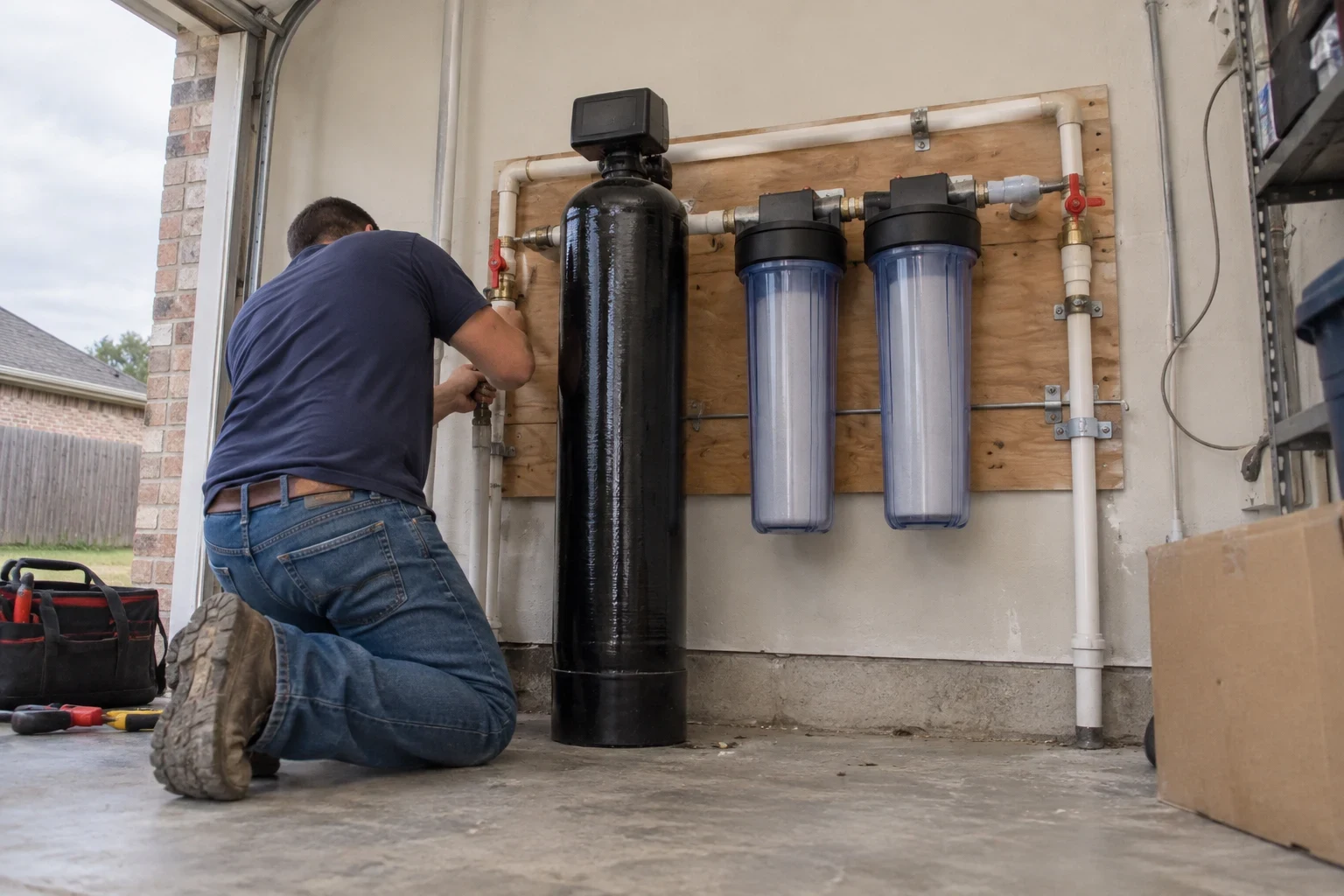
What a whole-home filter does and when it fits
Utilities add chlorine or chloramine to keep water safe in the mains between the treatment plant and your meter. That protects public health, but the leftover disinfectant can mean a pool smell in the shower, a flat taste in coffee and dry skin after a bath. A point-of-entry system passes your water through a bed of activated or catalytic carbon, which holds onto that disinfectant along with sediment and many taste and odor compounds before the line branches to your fixtures.
It makes sense when the complaint covers the whole house rather than one glass of water. If the worry is lead from older pipes or trace contaminants in what you drink, an under-sink reverse osmosis unit handles that better, and many of our customers install both. If you do not know what is in your water yet, begin with water testing so the equipment we suggest rests on results instead of assumptions.
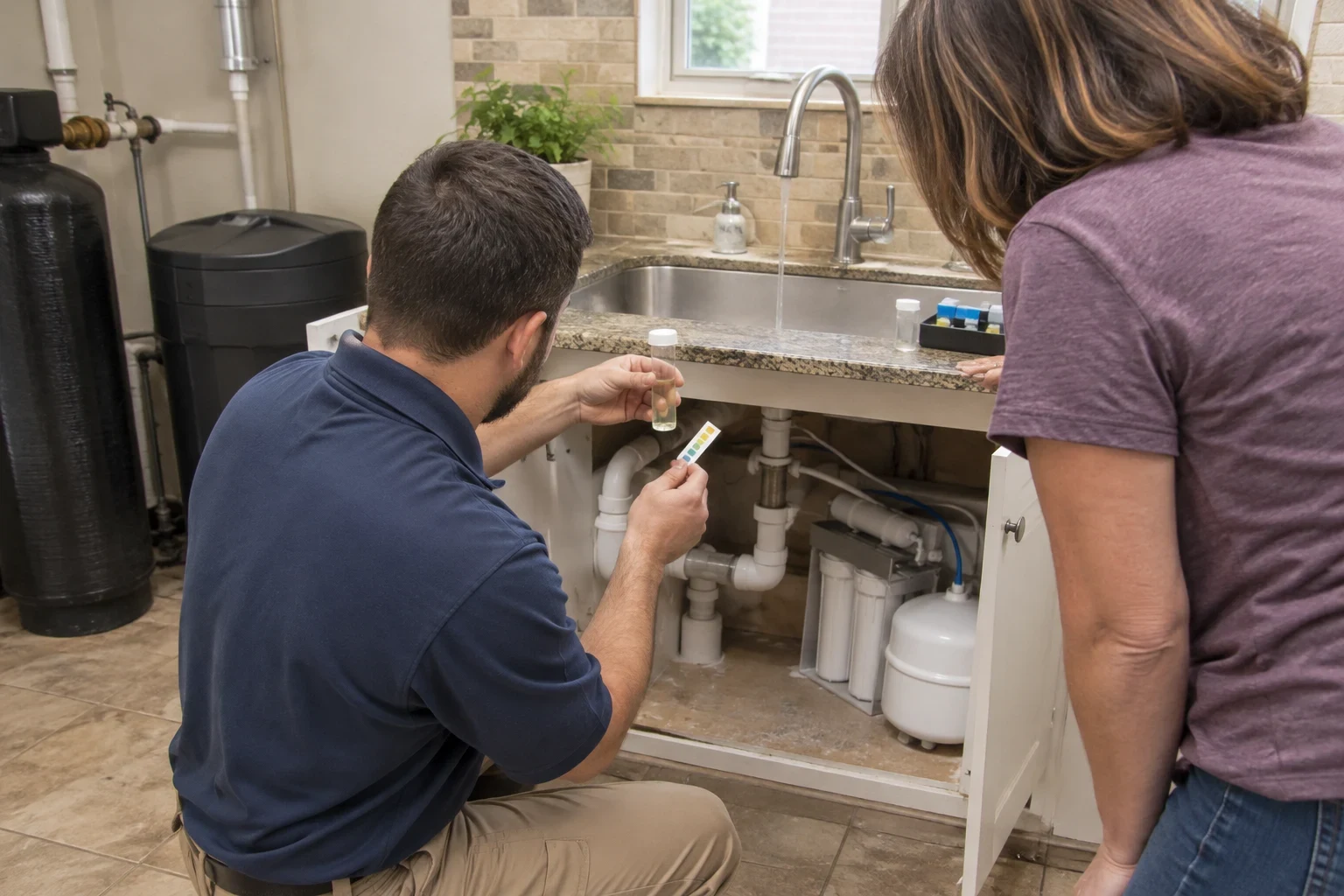
What the job includes
- 01
Sizing to your flow rate
We count bathrooms and fixtures and put a gauge on your incoming pressure. Carbon needs contact time, so a tank that is too small lets water pass through untreated, while an undersized cartridge housing restricts flow. We choose a media volume that fits your peak demand in gallons per minute.
- 02
Sediment prefilter
A sediment cartridge mounted before the carbon traps sand, pipe scale and rust flakes. That keeps the carbon bed from fouling early and protects the control valve.
- 03
Carbon media matched to your disinfectant
Standard granular carbon handles chlorine well. Chloramine reacts more slowly, so when your supply uses it we switch to catalytic carbon, a media processed to break that compound down faster.
- 04
Bypass and shutoff valves
Every install includes a bypass loop and isolation valves. Water keeps flowing to the house while a cartridge is swapped or the system is serviced.
- 05
Clean plumbing connections
We tie into the main with fittings made for your pipe, whether copper, PEX or CPVC. Where two different metals meet, a dielectric union prevents galvanic corrosion at the joint.
- 06
Service after the sale
We provide full services after the sale, including media and cartridge changes. The people who installed your system are the ones who come back, so they already know how it is plumbed.
Questions about Whole-Home Filtration?
Call(281) 377-9767Signs your home could use whole-home filtration
Chlorine smell in the shower
Hot water releases dissolved disinfectant as vapor, which is why the smell is strongest in a closed bathroom. A pitcher filter in the kitchen does nothing for this.
Dry skin and brittle hair
Many people notice less dryness once chlorine is removed from bathing water. It is a common reason customers choose point-of-entry over a single-tap filter.
Grit in aerators and showerheads
Tan or black specks collecting in faucet screens point to sediment. A prefilter stops it before it reaches valves and appliance inlets.
Off taste in ice and coffee
If the refrigerator filter and a countertop pitcher both feel like a patch, treating the water once at the main is simpler.
Stained fixtures
Orange or gray staining can come from iron or sediment. We confirm the cause with a test first, because heavy iron may need different media than carbon alone.
How installation day runs
- 1
Talk it through by phone
You tell us what you are noticing and how many people and bathrooms your home has. We explain which system types make sense and whether testing should come first.
- 2
Locate the main and plan the layout
On a typical slab home the main often enters near the garage or an outside wall. Equipment installed outdoors in Gulf Coast heat and sun gets a protective cover so UV and temperature swings do not degrade the housings. We show you where everything will sit before cutting any pipe.
- 3
Install and pressure test
We shut off the water, cut in the bypass and filter, then restore flow slowly to purge air. We check every joint for leaks and compare pressure before and after the system.
- 4
Flush, walk through and clean up
New carbon releases fine dust, so we flush the bed until the water runs clear. Then we show you the bypass valves and when the prefilter needs changing, and leave the work area as we found it.
What moves the cost
We offer free installation, so your price mostly reflects the equipment your home actually needs. A small house on city water with a mild taste issue needs far less hardware than a large house dealing with sediment and chloramine. We walk through the options by phone and explain what each component is for.
- Tank or cartridge system
- A cartridge setup is cheaper to buy, but its filters get swapped more often. A larger carbon tank holds more media and goes longer between service visits.
- Media volume and type
- More bathrooms mean a higher peak flow, and that takes more carbon. Catalytic carbon for chloramine is priced above standard granular carbon.
- Plumbing location and pipe material
- A main that is easy to reach, with straight pipe runs, goes quickly. Cramped spaces, rerouting or transitions between pipe types add fittings and labor.
- Added stages
- A sediment prefilter comes standard. Iron, heavy sediment or a hardness problem may call for extra stages or a separate unit, which is covered on our water softeners page.
Whole-home filtration questions
Will a whole-home filter lower my water pressure?
A correctly sized system costs only a small amount of pressure, and most people never feel it at the shower. Problems show up when the housings are too small for the house or a sediment prefilter is left in until it clogs. We take a gauge reading before and after the install, so you can see both numbers yourself.
Does it remove lead?
Lead is not a job for a whole-home carbon filter. It usually comes from older pipes, fittings or solder inside the house, which sit downstream of the filter on the main line. For the water you drink and cook with, we recommend a reverse osmosis unit under the kitchen sink.
Will it soften my water?
No. Carbon captures chlorine and many taste and odor compounds, but calcium and magnesium, the minerals that leave scale, pass right through it. If a hardness test shows your home needs softening, we can plumb a softener in next to the carbon system.
When do the cartridges and carbon get replaced?
The sediment cartridge fills at a pace set by how much grit your supply carries, and most homes change it several times a year. A carbon tank runs far longer, and its replacement point depends on the media volume and how much water your household uses. We set you up with a schedule and handle those changes through our full services after the sale.
Does it remove fluoride?
Very little. Standard carbon is not built to capture fluoride, so most of it stays in the water. If that matters to you, reverse osmosis at the drinking tap is the better tool, and we can show you how it pairs with a whole-home filter.
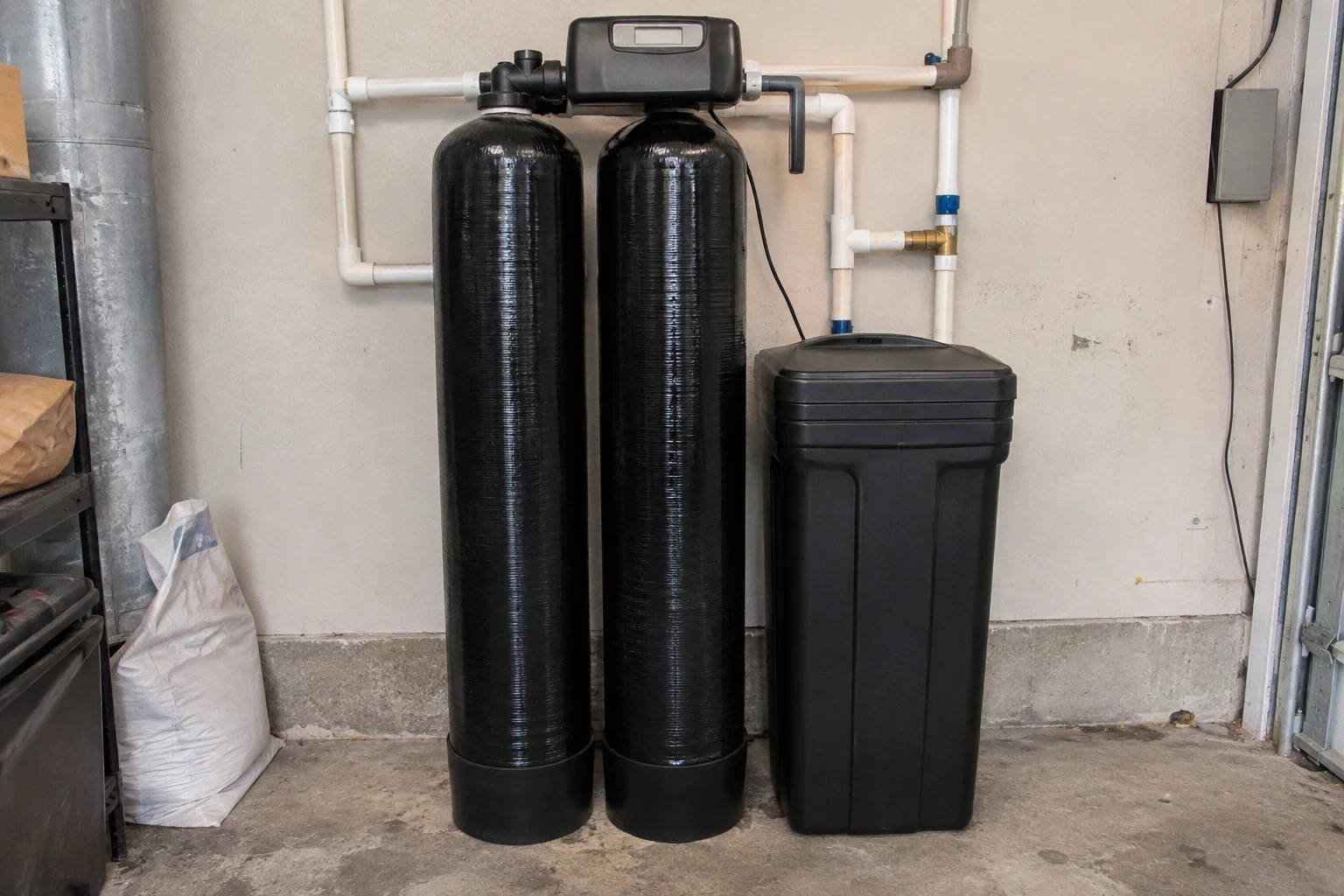
Treated water from the main line on
Describe what you are smelling, tasting or finding in your faucet screens, and where your main line comes into the house. The same small crew sizes the system, installs it and handles the service visits later.