ServicesWater Testing
Water Testing in Deer Park
We measure what is in your water before anyone talks about equipment. That means on-site chemistry, lab samples where a field kit is not accurate enough, and a clear explanation of each number from the same person who took the sample.
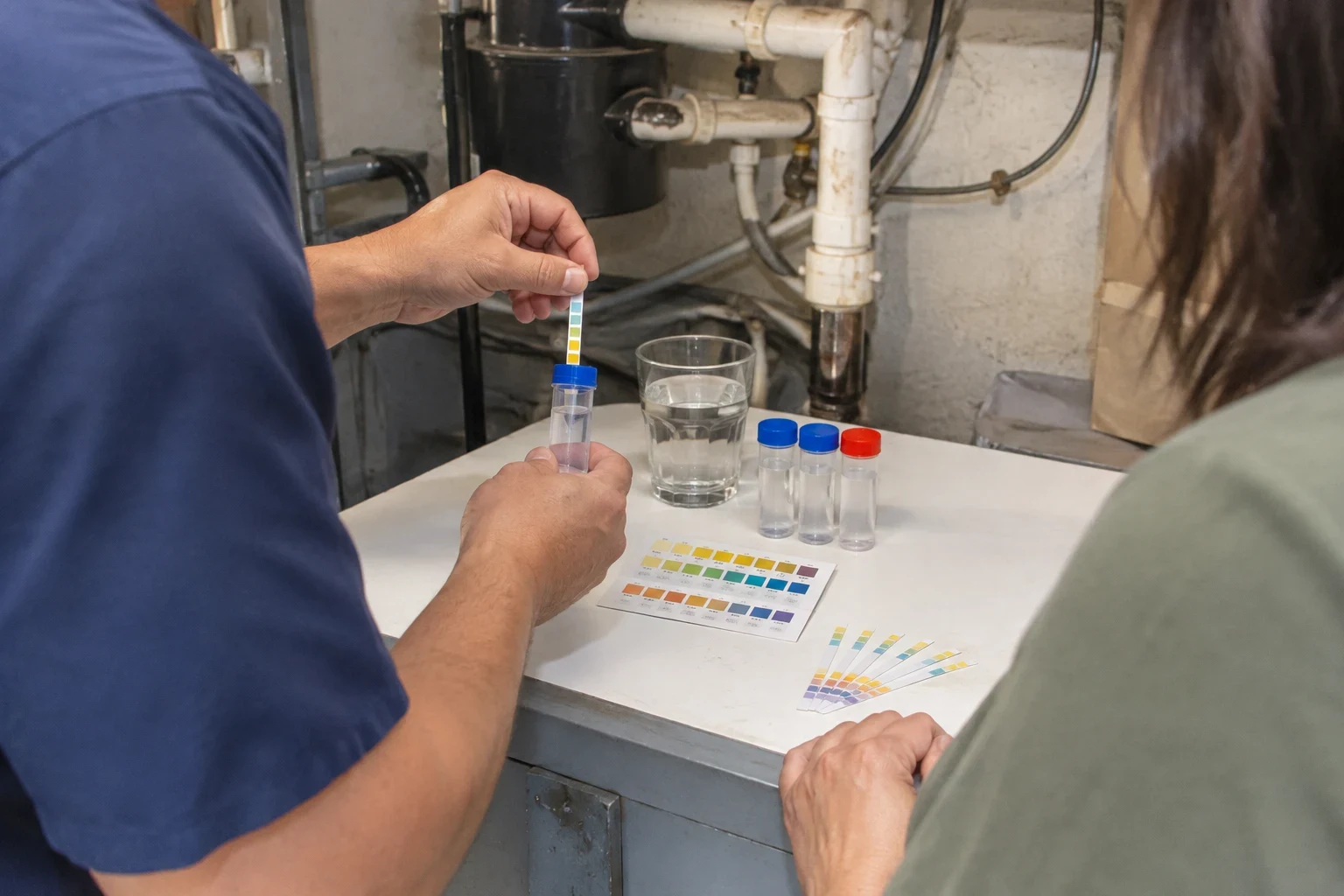
Test first, then decide what your home needs
Most water problems have a measurable cause. White scale on a showerhead is calcium and magnesium carbonate. An orange ring in the toilet bowl is usually iron oxidizing once it meets air. A pool smell at the kitchen tap is the disinfectant your utility adds on purpose. Each one points to a different fix, and some point to no fix at all.
Testing tells you which situation you are in. If your hardness reading is low, a water softener is money spent on a problem you do not have. If lead shows up in a first-draw sample, the issue is likely solder or fixtures inside your home, and an under-sink reverse osmosis unit at the kitchen tap may be the right answer. If the only complaint is taste, whole-home filtration with carbon may cover it.
We are a small crew, and the person who samples your water is the one who reads you the results and, if you go ahead, plans the install. Nothing gets lost between a salesperson and a technician.
What a water test covers
Field chemistry panel
At your tap we read hardness in grains per gallon, pH, total dissolved solids and iron. These numbers set the size of any softener or filter and tell us whether pH could be pulling metal from copper lines.
Chlorine and chloramine check
We measure total and free chlorine separately. The gap between them shows whether your supply uses chloramine, which matters because standard carbon removes chlorine easily but needs catalytic carbon and more contact time for chloramine.
Lead and copper first-draw sample
Water that has sat in the pipes overnight is collected before anyone runs a tap. That sample goes to an independent lab, since field strips cannot read lead at the low levels that matter.
Well panel for private wells
For homes on a well we collect sterile samples for coliform bacteria and E. coli, plus nitrate, iron, manganese and hydrogen sulfide. That data is the starting point for well water treatment.
Written readings and a straight answer
You get every number on paper, next to the level where it starts to cause trouble. Then we tell you what, if anything, is worth treating.
Signs your water is worth testing
- Crust on fixtures and glass
- Chalky white buildup on faucet aerators, shower doors or the kettle points to hardness. A test tells you how hard, which decides whether softening makes sense.
- Rust-colored stains
- Orange or brown marks in sinks, tubs and laundry usually mean iron. It can come from the supply, a well or corroding galvanized pipe, and the test helps sort out which.
- A strong chlorine taste or smell
- If you avoid drinking from the tap because of the smell, the residual disinfectant level tells us what kind of carbon would remove it.
- Plumbing installed before 1986
- Lead solder on copper joints was common before then. A first-draw lab sample is the reliable way to know whether any of it is reaching your glass.
- You rely on a private well
- No utility is monitoring a private well for you. Bacteria and nitrate can change after heavy Gulf Coast rain or flooding, so periodic testing is the only real check.
- An existing filter that seems to do nothing
- Testing water before and after an older system shows whether the media is spent, the unit is undersized or it was never built for your water.
From first call to final results
- 1
We talk through the problem
On the phone you describe what you see or taste, roughly when your home was built and where your water comes from. Those answers tell us which panel to bring and whether a first-draw lead sample means an early morning visit.
- 2
Samples taken at your taps
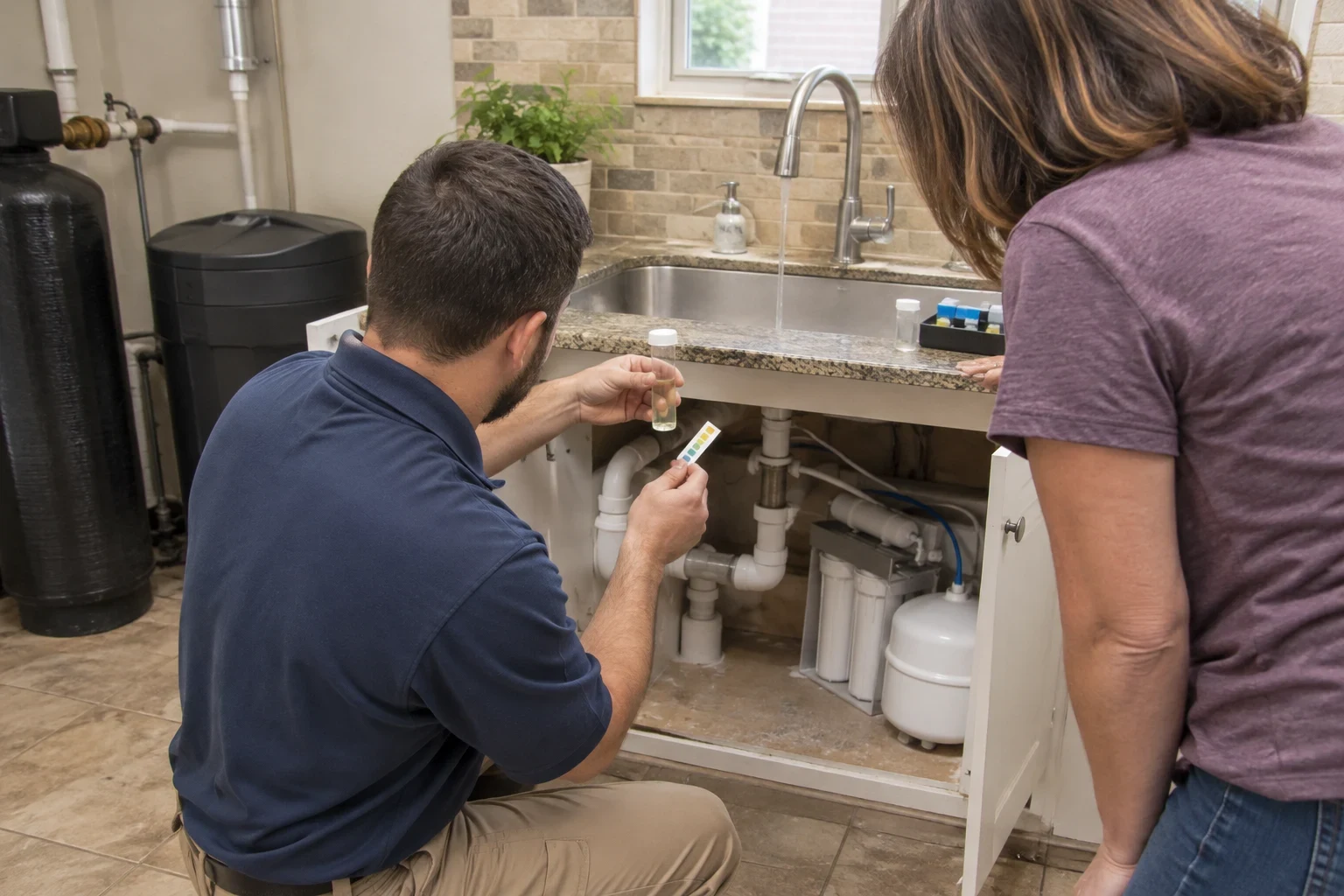
We read the water at the kitchen sink and at a point ahead of any filter you already have, so raw and treated water can be compared directly. Every lab bottle is filled, labeled and sealed while you watch.
- 3
Outside lab for the sensitive items
Lead, copper and bacteria samples travel to an independent lab. The meter and strip readings are explained before we leave, along with a timeline for the lab report.
- 4
One person walks you through it
The technician who took your samples reviews the finished report with you, one line at a time. If treatment is worth doing, that same person sizes the equipment and shows up on install day.
What sets the price of a water test
Two things drive the number: how many items we measure and how many of those go out to a lab. A quick on-site check for hardness and chlorine is a small job, and a full private well workup is a much bigger one. On that first phone call we lay out which items your panel covers and what it costs, so you know the scope and the price before anyone comes to your home.
- How many items are on the panel
- Every added parameter, such as manganese or nitrate, means another reagent at the tap or another line on the lab order.
- On-site meters versus lab analysis
- Lead and bacteria have to be run by an outside lab using its formal test methods. That costs more than strips and handheld meters, but those two results are not reliable any other way.
- Utility supply or private well
- A well panel adds sterile bacteria bottles and a longer mineral list, so it is a larger test than a check on utility water.
- A follow-up test after treatment
- Testing again once a system is running confirms it is doing its job. If you buy a system from us, our full services after the sale cover that kind of check.
Water testing questions
- My city water meets state and federal standards. Why test it?
- Compliance is measured at the treatment plant and across the distribution mains, not at your kitchen faucet. Lead and copper can be picked up from solder and fixtures inside your home, and hardness or taste are comfort issues the regulations do not cover. A test shows what actually ends up in your glass.
- Is a hardware store test strip good enough?
- Strips give a rough hardness or chlorine reading and that is about it. They cannot detect lead at the levels that matter, and they cannot tell you anything about bacteria. We use strips and meters for the quick numbers and send the sensitive ones to a lab.
- Does a test visit turn into a sales pitch?
- No. We go through what the readings support and stop there. If your water checks out, you hear that plainly. If one issue is worth fixing, we point to the one system that handles it, and if you decide to buy, our free installation comes with it.
- How should I prepare for the visit?
- If lead is on the panel, leave the kitchen tap unused for at least six hours before we arrive, which usually means overnight. Keep any existing filter installed so we can sample the water going into it and coming out of it.
- How often does a private well need testing?
- Once a year for bacteria and nitrate is a reasonable baseline. Test again after flooding, after work on the well cap or pump, or any time the water changes in taste, smell or color.
Get real numbers for your tap
Describe what you notice at the faucet and tell us if your home is on a well or utility water. We will build the test around that question, and one person stays with you from the first sample to the last result.