ServicesWater Softeners
Water Softeners in Deer Park
A softener earns its place when a test shows hard water, not before. We measure your hardness, size the resin tank and control valve to how your home uses water, then install it with the same small crew that ran the test. Free installation comes with every system.
How ion exchange softening works, and who needs it
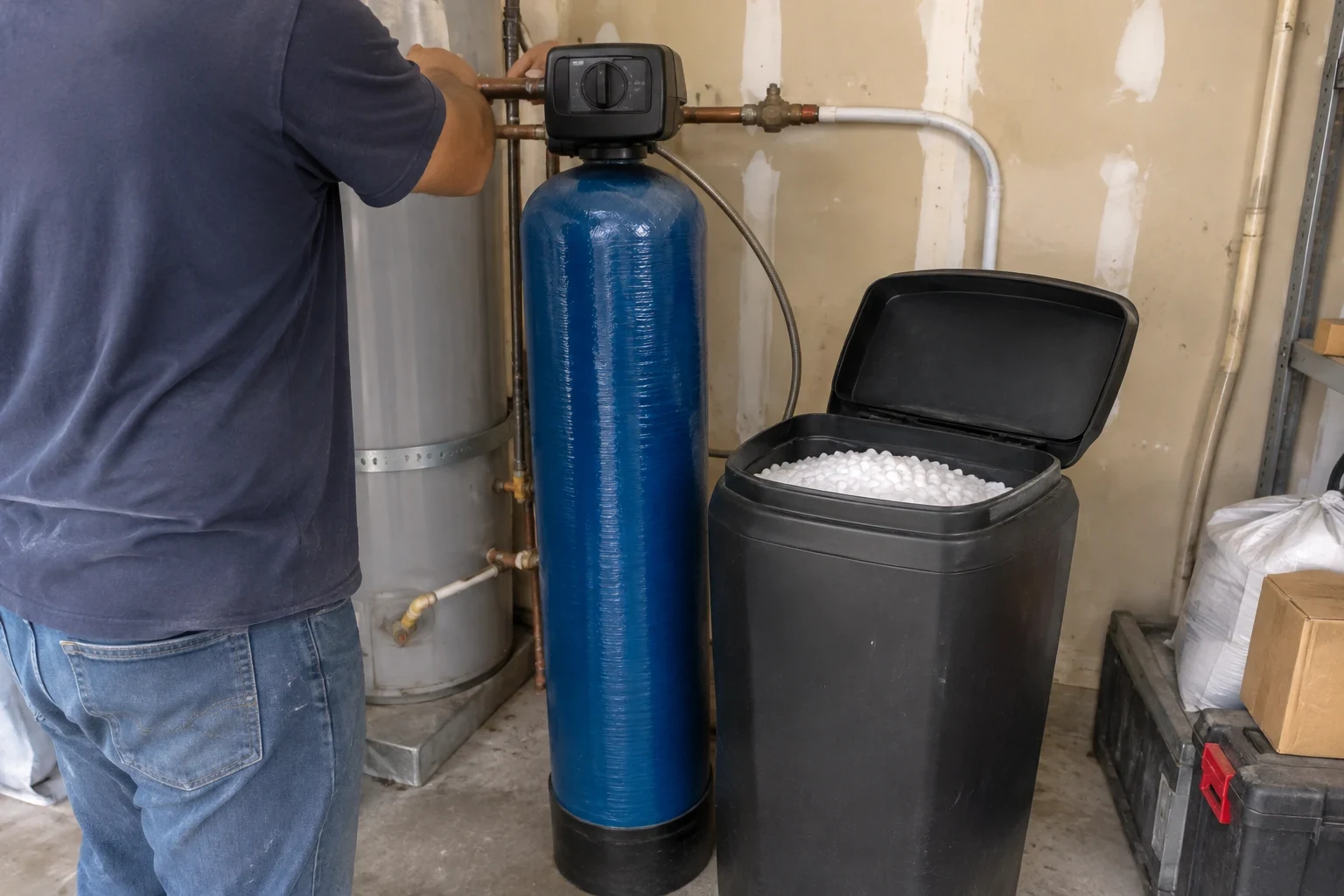
Hard water carries dissolved calcium and magnesium. Those minerals stay in solution until something forces them out, such as the warmth inside a water heater or evaporation as a wet surface dries. What they leave behind is scale, and it builds up on water heater elements, the heat exchangers in tankless units, showerhead nozzles and shower glass. A softener removes those minerals by ion exchange. In the mineral tank, water passes over resin beads loaded with sodium or potassium ions, and the beads release those ions as they capture calcium and magnesium.
When the beads are saturated with hardness, the control valve runs a regeneration cycle. It draws salty brine from the brine tank across the resin, flushes the captured minerals to the drain and restores the beads for the next round. A correctly sized system does this every few days, usually overnight, without any input from you.
A softener does one job. Chlorine, sediment and most other contaminants pass straight through it, so if your complaint is taste or smell, whole-home filtration is the equipment that fixes it, and we will say so. We install a softener only after water testing shows hardness high enough to justify one.
What a softener installation includes
- 01
Measuring hardness and iron
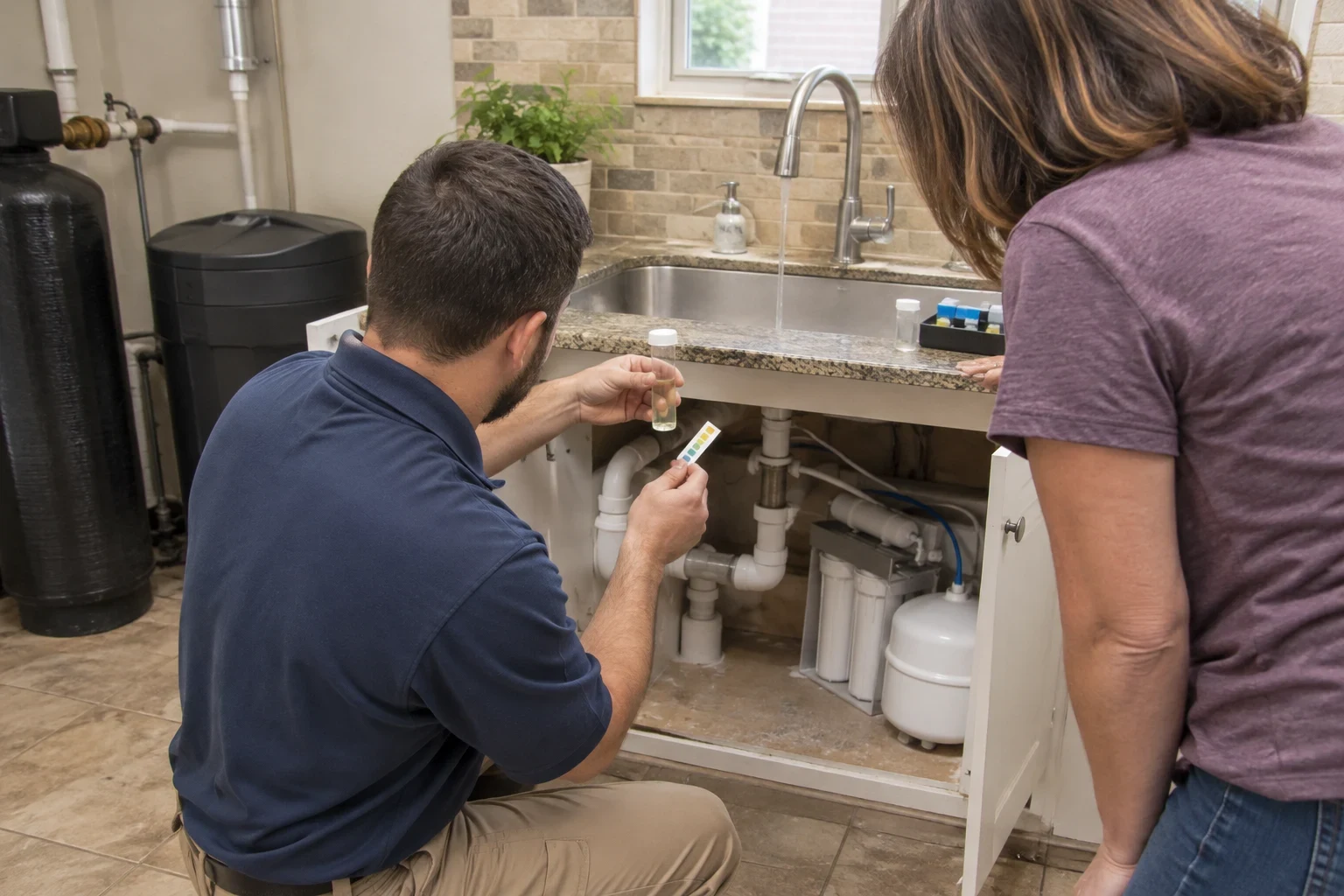
Before choosing equipment, we read your hardness in grains per gallon and look for dissolved iron. Iron coats resin beads and shifts the capacity the unit has to carry, so those two numbers shape everything that follows.
- 02
Sizing by grain capacity
Hardness times your home's daily gallons gives the grains the unit has to pull out each day. From that we choose a resin volume that lets the system go several days between regenerations rather than cycling every night, which cuts salt and water use.
- 03
Demand-initiated control valve
Our installs use a metered valve that tracks real gallons through the unit and recharges the resin only once it is close to spent. A basic timer valve regenerates on the calendar, even during a week when nobody was home.
- 04
Bypass, drain line and overflow
Each system goes in with a bypass so the unit can be taken offline without shutting off your water. The drain line ends at an air gap so waste brine can never be pulled back into the supply, and the brine tank gets its own overflow line.
- 05
Setup and handoff
We program the valve to your measured hardness before leaving. Then we show you where the bypass is, how to read the salt level, and what the quiet churn of an overnight regeneration sounds like so it does not catch you off guard.
Questions about Water Softeners?
Call(281) 377-9767How hard water shows up around your home
Chalky rings on fixtures
The white crust that builds up on faucet aerators and around showerhead holes is calcium carbonate. As it thickens, it chokes the openings and your flow drops.
Film that comes back after every wash
A cloudy haze on drinking glasses and shower doors once they dry is the minerals the water left behind when it evaporated.
Crackling from the water heater
In a tank heater, scale piles up on the bottom and pockets of water get trapped beneath it. Those pockets flash to steam and crackle when the burner lights, and the mineral layer slows heat transfer so the burner has to stay on longer.
Repeated tankless flush alerts
Plenty of tankless heaters warn you when scale builds inside the heat exchanger. If those flush reminders keep coming, hardness is the likely cause.
Weak suds and stiff towels
Calcium binds with soap and forms a sticky curd in place of lather. You end up using extra shampoo and detergent, and laundry can dry rough.
How a softener job runs
- 1
Test at your tap
We draw a sample and measure hardness and iron. If the reading is low enough that a softener will not pay off, we tell you that plainly.
- 2
Size and site the unit
We calculate grain capacity from your results and household size, then pick a location near where the main line enters. On slab homes that is often the garage, close to a drain and an outlet.
- 3
Install day
The crew who tested your water does the install. We shut off the main, cut in the bypass and inlet and outlet connections, run the drain line with an air gap, fill the brine tank and pressure-test every joint. Most outdoor hose bibs can stay on unsoftened water if you prefer.
- 4
First regeneration and check
We start a manual regeneration, confirm brine draw and drain flow, then retest the outlet water for hardness before we pack up and clean the work area.
- 5
Service after the sale
We offer full services after the sale, so the same people handle valve adjustments, resin questions and any repair down the road.
What sets the price of a softener
Two homes can need very different units. The price follows the hardness we measure, how much water you use and what the plumbing at the install spot looks like. We offer free installation, so most of what you are paying for is the equipment that fits your numbers.
- Hardness and household size
- Higher hardness or more people means more grains removed per day and a larger resin tank to keep regeneration intervals reasonable.
- Valve type
- A metered, demand-initiated valve costs more up front than a timer but uses less salt and water over the life of the unit.
- Iron or sediment in the water
- If testing shows iron or grit, a sediment prefilter or iron-rated resin may be needed to protect the bed.
- Salt or potassium
- Potassium chloride works in place of sodium chloride but costs more per bag over time. It is a running cost, not an equipment cost.
Questions about softening your water
Does softened water taste salty?
No. The sodium a softener adds tracks the amount of hardness it pulls out, and at ordinary hardness levels that amount sits well under the point where a person can taste it. If you would rather keep sodium out of the water you drink and cook with, a reverse osmosis system under the kitchen sink strips most of it back out.
How much attention does the salt need?
The pace of salt use comes down to how hard your water is and how many gallons your home goes through. With a metered valve, a monthly look inside the brine tank is usually enough, refilling when the pellets run low. Keep salt above the waterline, and if a hard shell forms across the top, called a salt bridge, break it up so brine can form underneath.
Can a softener get rid of a chlorine smell?
It cannot. The resin is built to swap out calcium and magnesium and nothing else. Chlorine is handled by carbon media in whole-home filtration, and a carbon tank and a softener can be plumbed in series on the same line.
How do I know a softener is worth it for my home?
It is worth it only when the water carries enough hardness to leave scale. That is the reason we measure before recommending anything. If the reading comes back low, we will say plainly that a softener would not pay for itself.
My water comes from a private well. Will a softener cover it?
Probably not on its own. Wells frequently bring iron, grit or other problems along with hardness, and each needs its own equipment. Our well water treatment page walks through those options, and a test shows which ones apply to you.
Find out what your hardness actually is
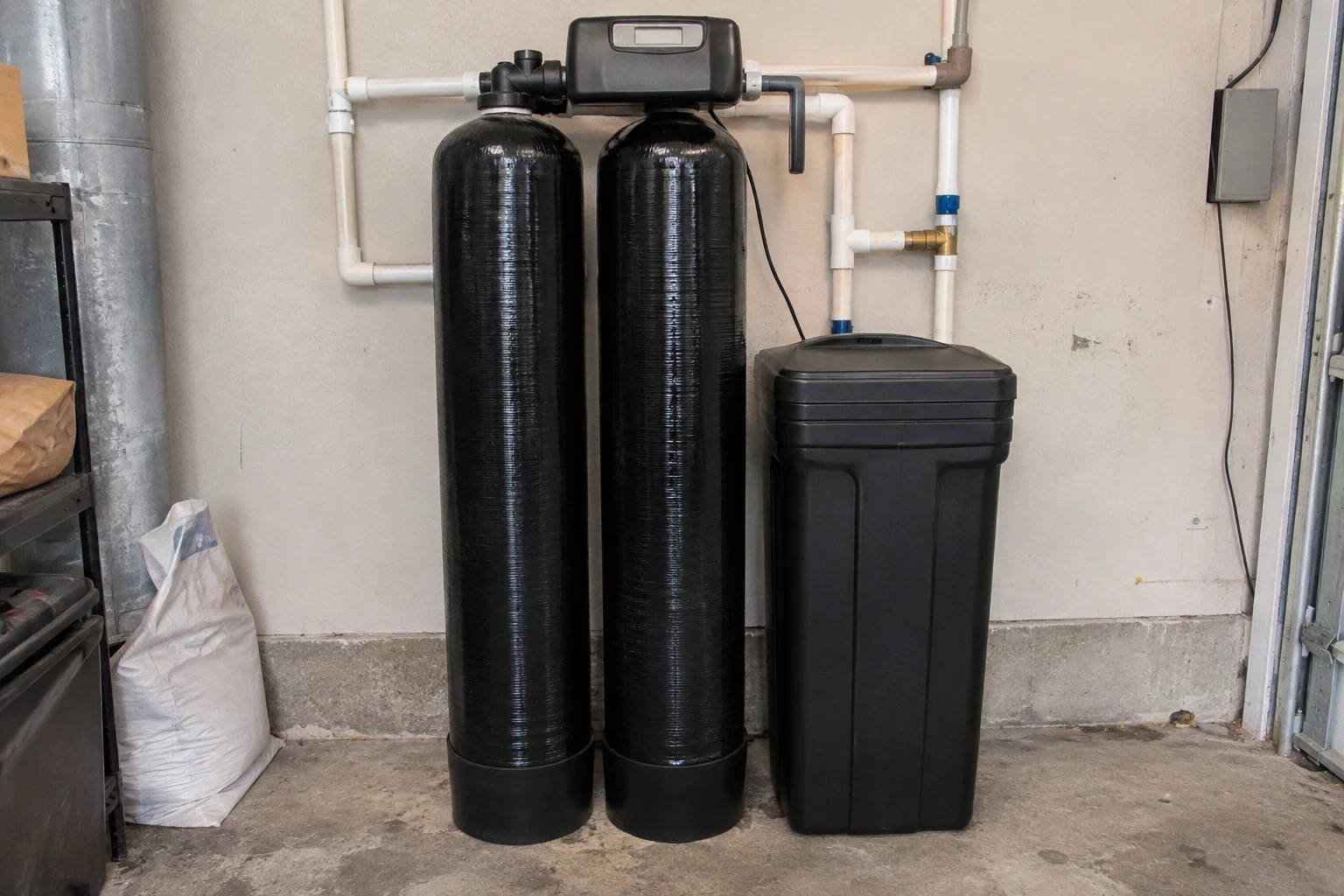
Tell us what you are seeing at the tap and on your fixtures. We will set up a test, and the same small crew will carry it through to a sized, installed softener if the results call for one.