ServicesAlkaline Water Systems
Alkaline Water Systems in Deer Park
We install under-sink alkaline systems that filter your drinking water, then add calcium and magnesium back so it tastes rounder and sits at a higher pH. The same small crew that installs it comes back to change cartridges, so you always know who is under your sink.
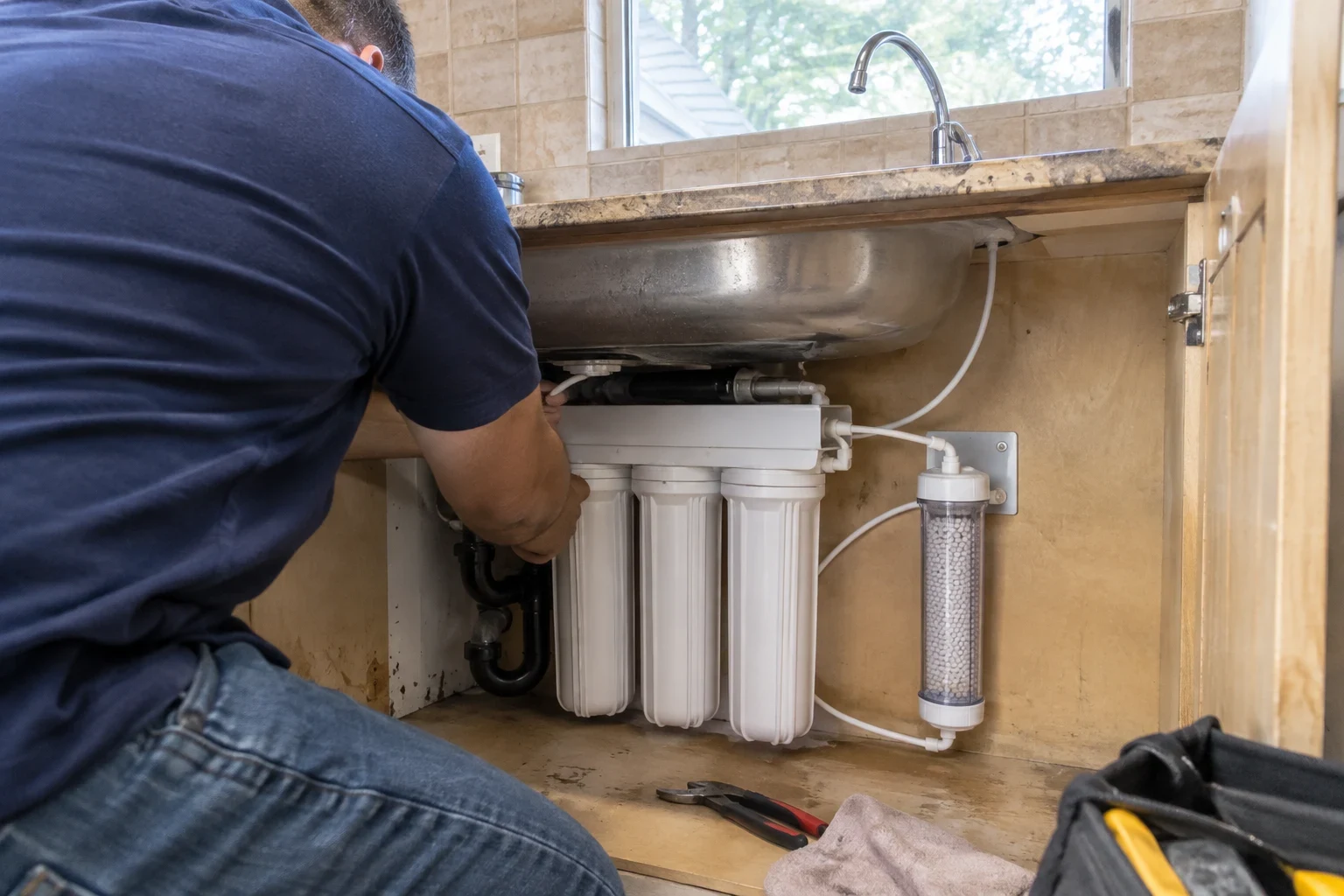
What an alkaline system actually does
Most of the alkaline systems we install start with reverse osmosis. The RO membrane strips out dissolved solids, chlorine and metals, but it also removes minerals. Dissolved carbon dioxide passes through the membrane, which leaves the water slightly acidic and a little flat. A remineralization cartridge after the storage tank fixes that. Water runs through a bed of calcite (calcium carbonate), often with magnesium oxide, picks up a measured amount of both, and leaves the dedicated faucet at a higher pH.
We are straight with people about what that gets you. The benefit we can stand behind is taste: mineralized water is smoother, makes better coffee and tea, and loses the flat edge some people dislike in plain RO water. We do not make medical claims, and we will not tell you a higher pH fixes anything in your body.
Because we are a small team, the person who measures your cabinet is the person who installs the system and the one who returns for service. If you already have reverse osmosis at the kitchen sink, we can often add an alkaline stage to it instead of starting over.
What the work includes
- Filtration ahead of the mineral stage
- Sediment and carbon prefilters protect the RO membrane from grit and chlorine, both of which shorten its life. The membrane then does the heavy filtering before any minerals go back in.
- Calcite and magnesium remineralization
- The post-filter cartridge holds the mineral media that raises pH and adds a little hardness back. We match the cartridge to what you want from the water and how much you drink.
- Dedicated drinking faucet
- If your sink has a spare sprayer opening, the drinking faucet goes there. If not, we bore a fresh opening through the sink deck or the countertop. Your main faucet keeps running regular water for dishes.
- Drain saddle, tank and lines
- We tie the RO drain line into the sink drain above the trap with a saddle clamp, set the pressurized storage tank in the cabinet and run food-grade tubing with push-fit connections. Every joint gets checked under pressure before we leave.
- Before-and-after readings
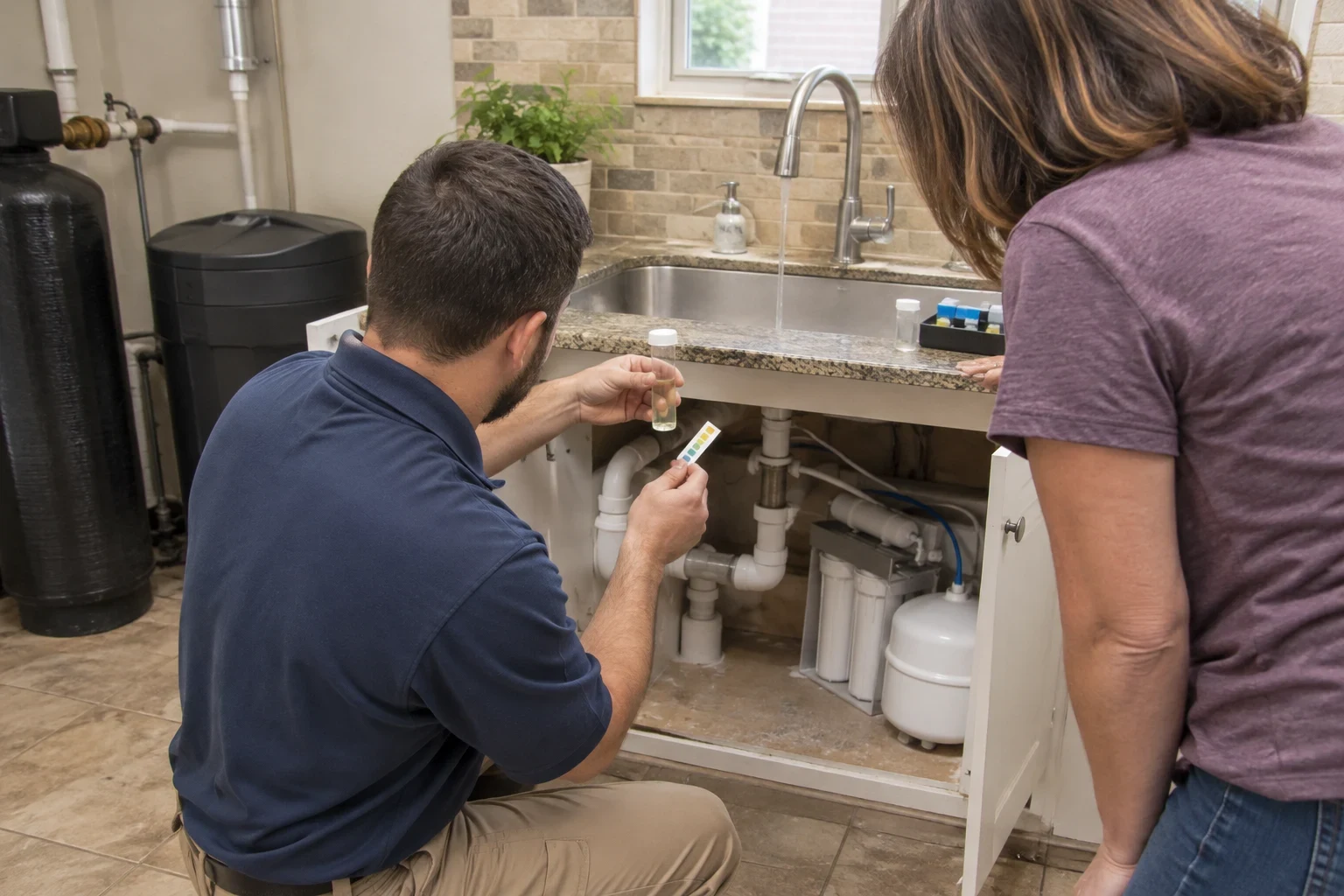
- We measure TDS and pH at your current tap and again at the new faucet, so you see the change in numbers.
- Service after the sale
- We offer full services after the sale: cartridge changes, membrane replacement and a visit when the flow slows down.
Signs an alkaline system fits your home
Your RO water tastes flat
Plain reverse osmosis water can taste empty or faintly sour. That comes from low mineral content and mild acidity, and a remineralization stage is the direct fix.
You buy alkaline water by the case
If you haul bottled alkaline water home from the store, an under-sink unit makes comparable water on demand, with no plastic to recycle and no extra store runs.
Chlorine taste in your glass
City water is disinfected, and many people notice it most in a long Gulf Coast summer when they drink more. The carbon stage removes that taste before the minerals go in.
Coffee and tea taste thin
Brewing pulls flavor with help from the minerals in the water. Water with almost none tastes weak in the cup, and chlorinated water adds its own note.
Your fridge filter is not enough
A refrigerator cartridge is a compact carbon block built mostly for taste. It cannot lower dissolved solids or add minerals back.
What moves the price
We price each system once we know your sink, your water and how much your household drinks, and we go over the parts line by line. We offer free installation, so most of what you pay covers equipment and cartridges. We do not list dollar amounts here because the right setup varies too much from one kitchen to the next.
Where you are starting
Adding a mineral stage to an RO unit you already own costs far less than a new system with membrane, tank and faucet.
Number of stages
Some systems use one combined calcite cartridge. Others separate calcium and magnesium media or add a final carbon polish, which means more cartridges to buy and change.
Faucet and countertop
A sink with a spare sprayer opening keeps this part quick. Quartz and granite need a diamond core bit and slower, careful work, and a premium faucet finish adds cost.
Replacement cartridges
Mineral media dissolves as it works, so it has to be replaced. How often depends on how much water you draw, and we name the replacement parts up front.
What the water needs first
If testing shows heavy sediment or iron, a stronger prefilter or whole-home filtration ahead of the sink may be the better first step.
How the install day goes
- 1
A conversation by phone
We ask about your water, your sink and what you drink now. If there is any question about what is in the water, we suggest water testing first so the system fits the actual results.
- 2
Readings and layout
On site we take TDS and pH readings, check the cabinet for room for the tank and confirm where the drain and cold supply connect. We show you where the faucet will go before drilling anything.
- 3
Installation
We shut off the cold line, fit the feed valve, mount the filter housings, set the tank and run the lines. Most kitchen installs are finished in one visit, and we wipe out the cabinet before we pack up.
- 4
Flush, test and walkthrough
New carbon and mineral cartridges release fine particles, so we run the system and dump the first tanks. Then we take final pH and TDS readings and show you how to tell when a cartridge is due.
Alkaline water questions
Is alkaline water healthier?
We do not claim it is. What we can say is that most people prefer its taste to plain RO water, and the filtration ahead of the mineral stage removes chlorine, sediment and a broad range of dissolved solids. If health is your main reason, talk with your doctor.
What is the difference between a remineralizing filter and an ionizer?
An ionizer uses electrolysis plates to split water into alkaline and acidic streams. A remineralizing filter raises pH by adding calcium and magnesium after filtration. The systems we install use remineralization, which has no electronics to fail and parts that are easy to swap.
Will it leave scale in my kettle?
Remineralized water carries a modest, controlled amount of calcium, much less than hard tap water. A light film can show up in a kettle over time, and a vinegar rinse clears it.
Can it feed my refrigerator ice maker?
In most kitchens it can. When tubing can reach the refrigerator through the cabinets or beneath the floor, we tee a line off the system for the ice maker and water dispenser. If the route will not work in your kitchen, we say so during the visit.
Who services it after the install?
We do. Because our team is small, it is usually the same people who installed your system who come back to change cartridges, and they already know how your cabinet is plumbed.
Do you install outside Deer Park?
Yes. We install alkaline systems in Pasadena, La Porte, Seabrook and other nearby towns.
Smoother drinking water at your kitchen sink
Tell us what you drink now and what is under your sink, and we will walk you through the setup that fits. The same crew handles the install and every visit after.