ServicesReverse Osmosis
Reverse Osmosis Systems in Deer Park
An under-sink reverse osmosis system sends your kitchen water through a semipermeable membrane that holds back dissolved salts and lead, while carbon stages strip out the chlorine taste. You get filtered water at its own faucet, installed by the same small crew that tested your water first.
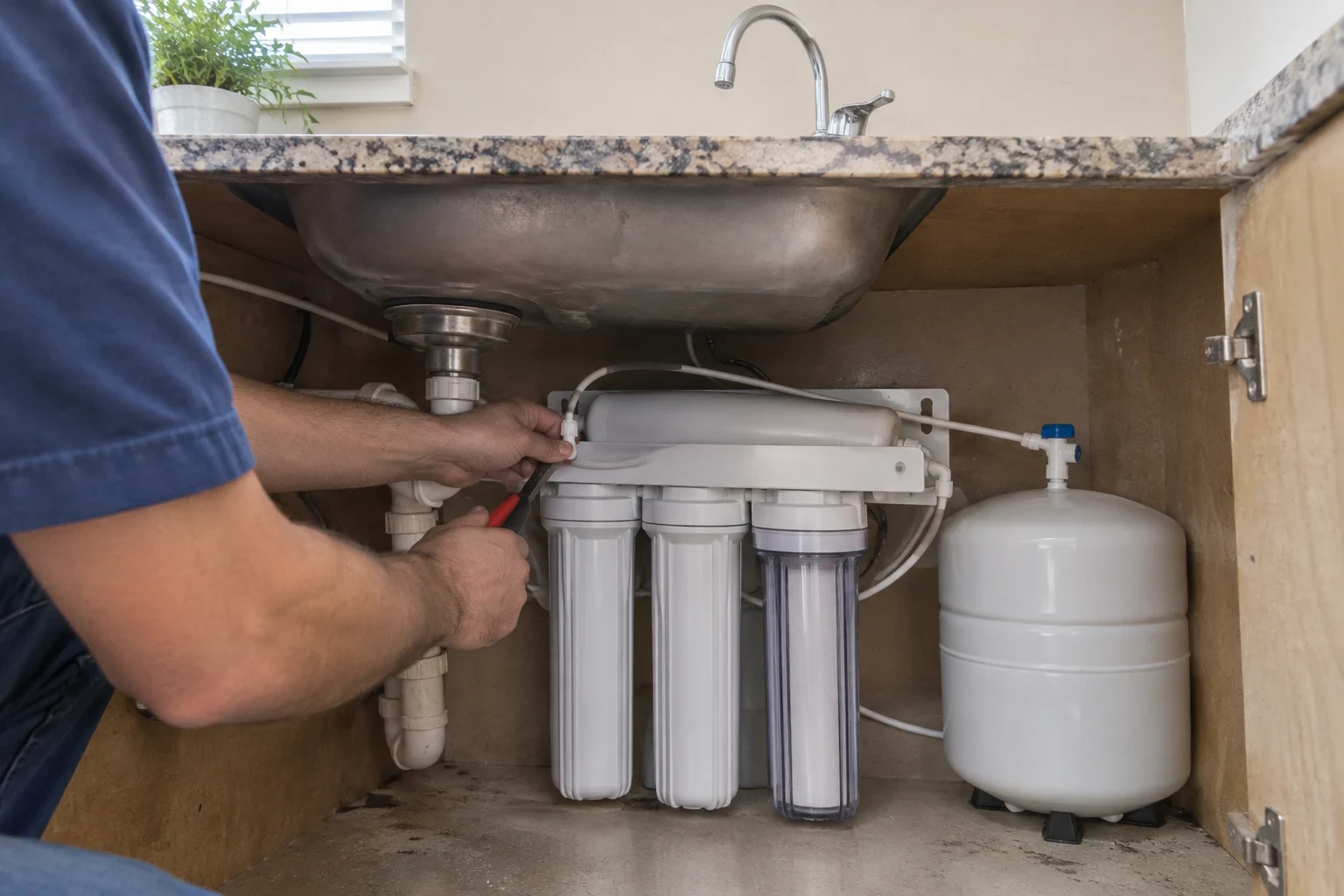
What reverse osmosis does at your kitchen sink
A reverse osmosis system uses your line pressure to force water through a thin-film composite membrane. Water molecules pass through. Most dissolved solids, metals like lead, nitrates and fluoride do not, and they are rinsed to the drain. Carbon stages before and after the membrane remove chlorine and the taste it leaves.
RO is a point-of-use system. It treats the water for drinking, coffee, cooking and often the refrigerator ice maker, not the whole house. If you want chlorine out of the shower too, whole-home filtration handles that, and the two work well together.
The same two or three people who test your water also install the system and come back for filter changes. They know how your unit is plumbed, so nobody has to rediscover it on each visit.
What comes with an RO installation
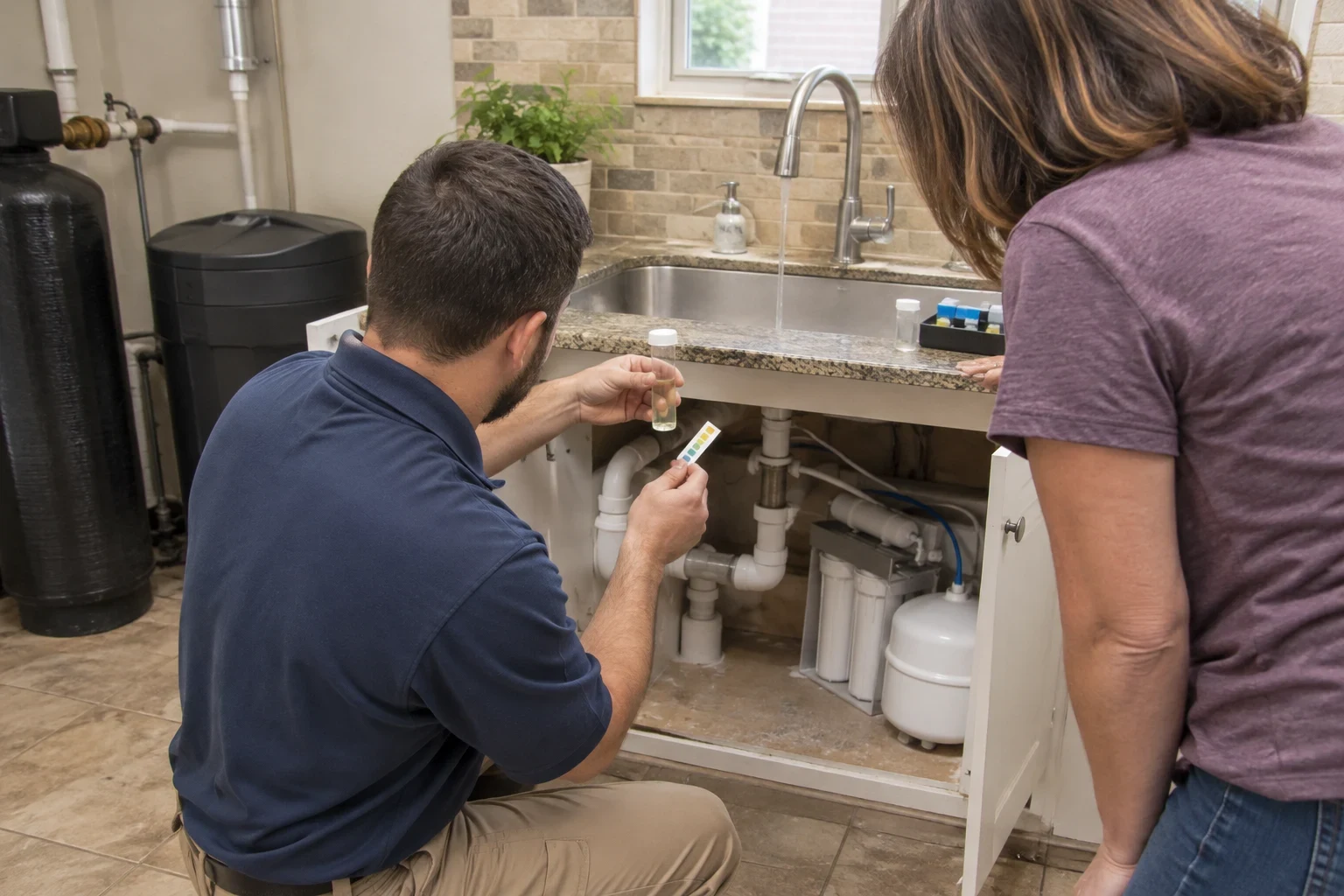
Water test before we size anything
We check total dissolved solids, hardness, chlorine and your static line pressure. Those numbers decide which membrane and prefilters fit, and whether you need a booster pump.
Sediment and carbon prefilters
A sediment cartridge catches rust and grit, then a carbon block removes chlorine or chloramine. That order matters, because chlorine breaks down a TFC membrane and shortens its life.
Membrane, tank and postfilter
Purified water collects in a pressurized storage tank, so the faucet pours at a steady rate instead of trickling at membrane speed. Water that sits in a tank can pick up a flat or slightly plastic note, so one more carbon cartridge between the tank and the faucet cleans that up. If you want minerals added back, we can fit a remineralizing stage like the ones in our alkaline water systems.
Dedicated faucet and drain connection
We mount a lead-free faucet on the sink or countertop. The reject line ties into the sink drain through a saddle fitting placed higher than the P-trap, which keeps drain water from being drawn back toward the system. An automatic shutoff valve stops flow to the drain once the tank is full.
Optional ice maker or fridge line
We can run a tee to the refrigerator so ice and dispenser water come from the RO tank, with tubing routed where it will not get pinched.
Free installation and follow-up
Our offers include free installation and full services after the sale. That covers filter changes, membrane checks and any adjustment the system needs later.
Signs an RO system makes sense for your home
- Tap water tastes like a pool
- Chlorine used to disinfect city water is safe but noticeable. RO's carbon stages remove it, and the membrane catches what carbon misses.
- Older pipes or fixtures
- Lead can leach from old solder, brass fittings and some service lines, even when the utility's water is clean. RO is one of the few home methods that reliably reduces it at the tap.
- White crust on the kettle
- That chalky buildup inside a kettle or coffee maker is calcium and magnesium left behind as water boils off. The membrane keeps those minerals out of what you drink and cook with. If scale shows up on every fixture, ask about water softeners as well.
- You buy bottled water every week
- An RO tap gives you filtered water for drinking and cooking without hauling cases home or sorting plastic.
- A test showed high TDS or nitrates
- Numbers like these are exactly what a membrane is built for. If you are on a private well, we look at the full results with well water treatment in mind.
How the install day runs
- 1
Test and plan
We test your water and check pressure at the kitchen line. You get a plain answer on whether RO fits, plus the parts we would use and why.
- 2
Prepare the cabinet
We clear the sink base, lay down a drop cloth and shut off the cold supply. The storage tank usually sits beside the filter housings or in an adjacent cabinet.
- 3
Plumb and mount
We add a feed valve on the cold line, mount the housings, drill the faucet hole if needed and install the drain saddle. Every compression fitting is snugged and dry-checked.
- 4
Flush and verify
New carbon and membranes need flushing, so we run the first tank or two to drain. Then we measure TDS at the faucet against the tap so you see the reduction yourself.
- 5
Walk-through and cleanup
The installer shows you the shutoff, the filter order and when each stage is due. We wipe down the cabinet and take the packaging with us.
What moves the price of an RO system
Price depends on what your water needs and how your kitchen is laid out. Installation itself is free, so the cost is mostly the equipment. We explain each part before anything is ordered, so the number you hear on the phone matches the job.
- Number of stages
- A basic four-stage system costs less than one with remineralization or UV. We only suggest added stages your test results support.
- Water pressure
- RO membranes work best above roughly 50 psi. Below that, a permeate or booster pump keeps production up and waste down, and it adds to the parts list.
- Tank size and fridge hookup
- A larger tank or a line to the refrigerator means more tubing and fittings, especially when the fridge sits across the kitchen.
- Countertop and faucet
- Granite and quartz need a diamond core bit for a new faucet hole. An existing sprayer hole or soap dispenser opening can often be used instead.
Reverse osmosis questions we hear
- Does reverse osmosis waste a lot of water?
- A membrane can't clean itself without a constant rinse, so part of the incoming water carries the rejected solids out through the drain line. That share has dropped a lot over the years. An automatic shutoff valve stops all flow once the tank is full, and on low-pressure lines a permeate pump cuts the reject volume further. We size the flow restrictor to your specific membrane so the drain runs only as much as the system needs.
- How often do the filters need changing?
- Sediment and carbon prefilters usually last six to twelve months, depending on your water. The membrane typically lasts two to four years if the carbon is changed on time. Because the same crew services your system, we keep track of when each stage is due.
- Will RO remove healthy minerals?
- Yes, the membrane removes calcium and magnesium along with everything else. Most of those minerals come from food, not water. If you prefer the taste of mineralized water, a remineralizing postfilter adds some back.
- Do I need RO if my city water already meets standards?
- Not always. Utility water can test clean at the plant and still pick up lead or metals from older plumbing in your home, and many people simply dislike the chlorine taste. Water testing tells us which case you are in before you spend anything.
- How long does installation take?
- Most under-sink installs take two to three hours, including flushing. Adding a refrigerator line or drilling stone can add another hour. Your kitchen water is off only while we tie into the cold line.
Find out if RO fits your water
Tell us about your kitchen, your water and what bothers you about the taste. We will explain what we would test and which system makes sense, then the same crew handles it from install to filter changes.