ServicesWell Water Treatment
Well Water Treatment in Deer Park, TX
Private well water changes with depth, rock and season, so we start by testing yours. Then we build a treatment train for what is actually in it, whether that is iron, sulfur odor, sediment or bacteria. The same small crew tests, installs and comes back for service.
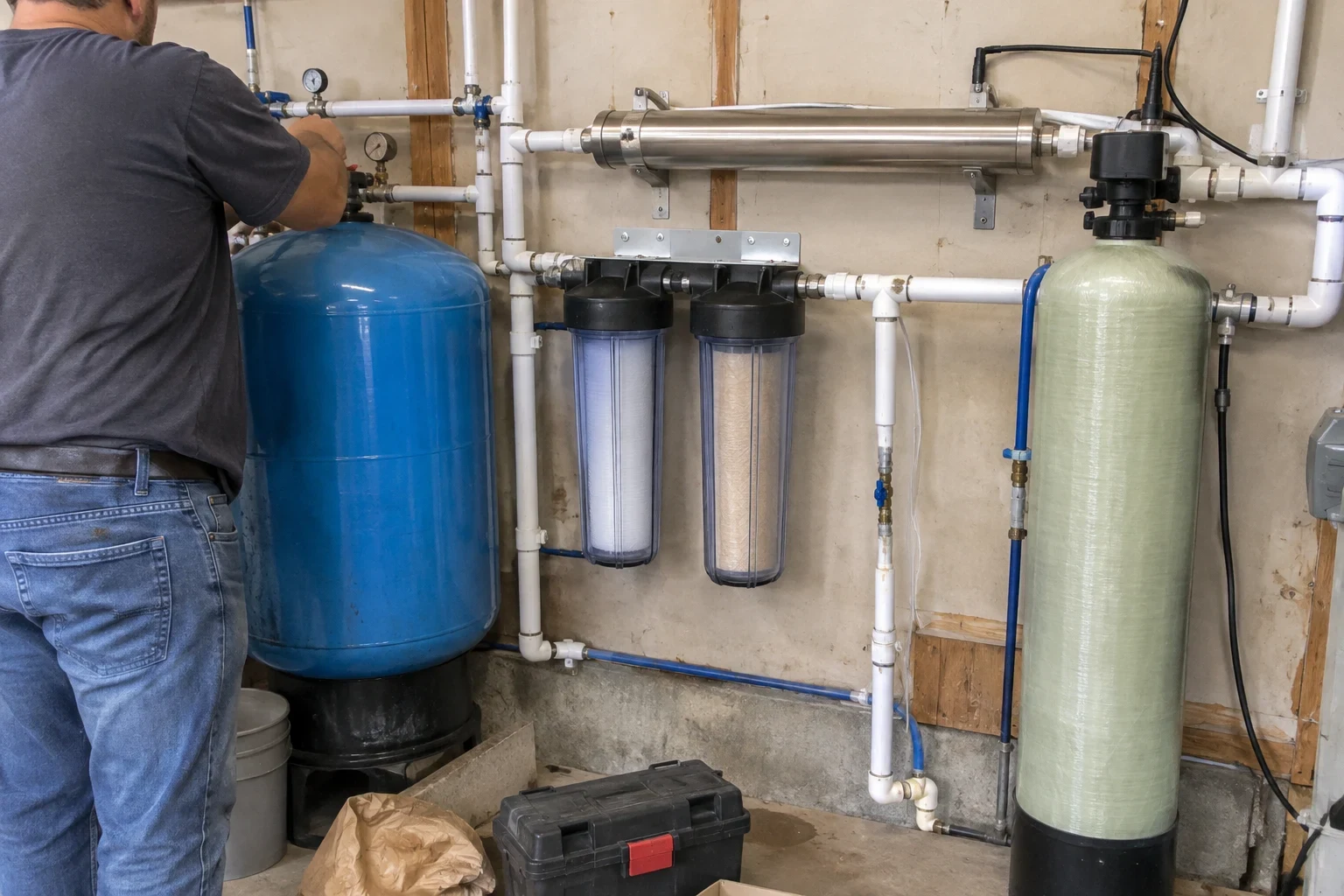
Treatment Built Around What Your Well Produces
A municipal plant treats water before it reaches you. A private well hands you raw groundwater, and whatever the aquifer carries comes straight through the pressure tank and into your home. That can mean dissolved iron that turns orange once it hits air, manganese that leaves black specks, hydrogen sulfide gas that smells like rotten eggs, fine sand from the screen, or coliform bacteria that got in through a worn well cap.
Each of those needs a different fix. Iron in its dissolved ferrous form has to be oxidized before a filter can catch it. Bacteria need disinfection, usually ultraviolet light. Sediment needs mechanical filtration ahead of everything else so it does not foul the other stages. Putting one generic filter on a well rarely solves the real problem, which is why we test first and size each stage to the numbers.
We keep jobs small on purpose. The person who pulls your water sample is the person who explains the results and the one who plumbs in the equipment, so nothing gets lost between a salesperson and an installer.
What a Well Treatment Job Includes
- Lab-style water analysis
- We test for iron, manganese, hydrogen sulfide, hardness, pH, total dissolved solids and bacteria. Those results decide every piece of equipment that follows.
- Sediment pre-filtration
- A spin-down screen or cartridge housing goes first to catch sand and grit. It protects valves and media downstream and is easy to flush.
- Iron and sulfur removal
- Depending on your levels, we use an air-injection oxidizing filter or a catalytic media tank. Both convert dissolved iron and sulfide into particles the media bed can trap, then backwash them out on a timer.
- UV disinfection
- When the test shows bacteria, or as a safeguard on a shallow well, we install a UV chamber as the last stage. Clear water matters here, so the UV goes after filtration, where nothing can shade the lamp.
- Hardness or pH correction
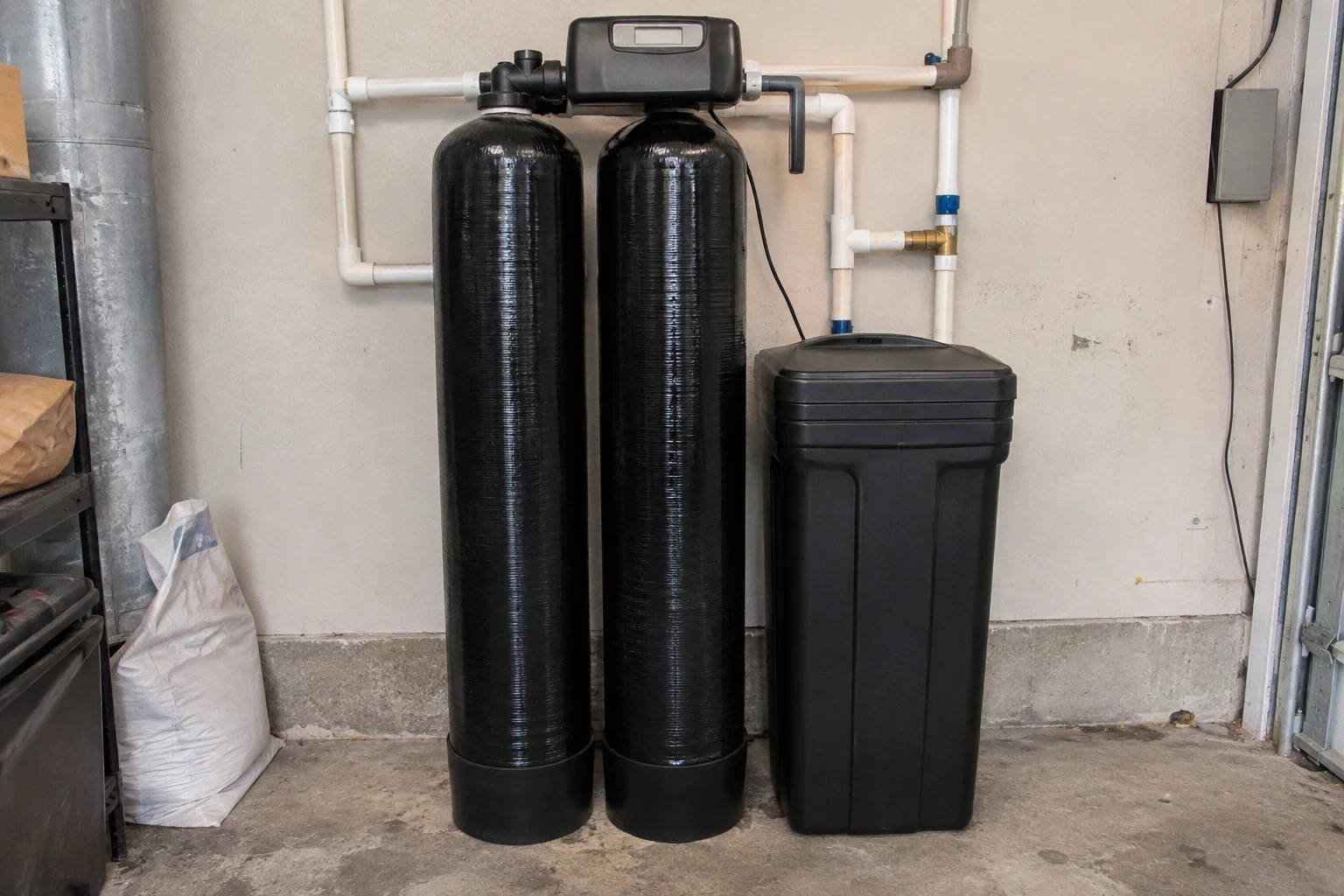
- If your test shows high hardness or acidic water, we can add a softener or a neutralizing tank. We only recommend these when the numbers support them.
- Bypass valve and clean install
- Every system gets a bypass so you keep water during maintenance. We label the stages and walk you through each valve before we leave.
Warning Signs Coming From Your Well
Rust marks on porcelain and laundry
Reddish-brown streaks under the tub spout, in the toilet bowl or on white clothes usually trace back to dissolved iron. Chlorine bleach reacts with that iron and tends to lock the discoloration into fabric.
A sulfur odor at the tap
Water that smells like rotten eggs is carrying hydrogen sulfide gas. You will often notice it most on the hot side or after the lines sit overnight, and over time it darkens silverware and eats at copper pipe.
Sand in faucet screens
When grit keeps clogging aerators or the inlet screen on your washing machine, sediment is slipping past the well screen.
Dark flecks or slimy buildup
Black particles or a slick film inside the toilet tank usually come from manganese, or from iron bacteria growing in the plumbing.
Water that changes after a storm
On the Gulf Coast, high water can carry surface runoff toward a wellhead. If your water turns cloudy or picks up a new taste after heavy rain, have it tested for bacteria before anyone drinks it.
What Moves the Price of Well Treatment
No two wells get the same system, so we price after the test, by phone, and line by line. Installation is free, and we offer full services after the sale. The main cost drivers are below.
What the test finds
A sediment filter alone costs far less than a train that handles iron, sulfur and bacteria together. Higher iron levels call for larger media tanks.
Flow rate and household size
Tanks and UV chambers are rated by gallons per minute. More bathrooms and more people mean larger equipment.
Space and plumbing at the well
Tight pump houses, old galvanized pipe or a missing drain for backwash add fittings and labor.
Ongoing media and parts
Cartridges, UV lamps and sleeves wear on a schedule. We tell you the replacement intervals up front so there are no surprises.
How the Work Goes, Start to Finish
- 1
Sample and test
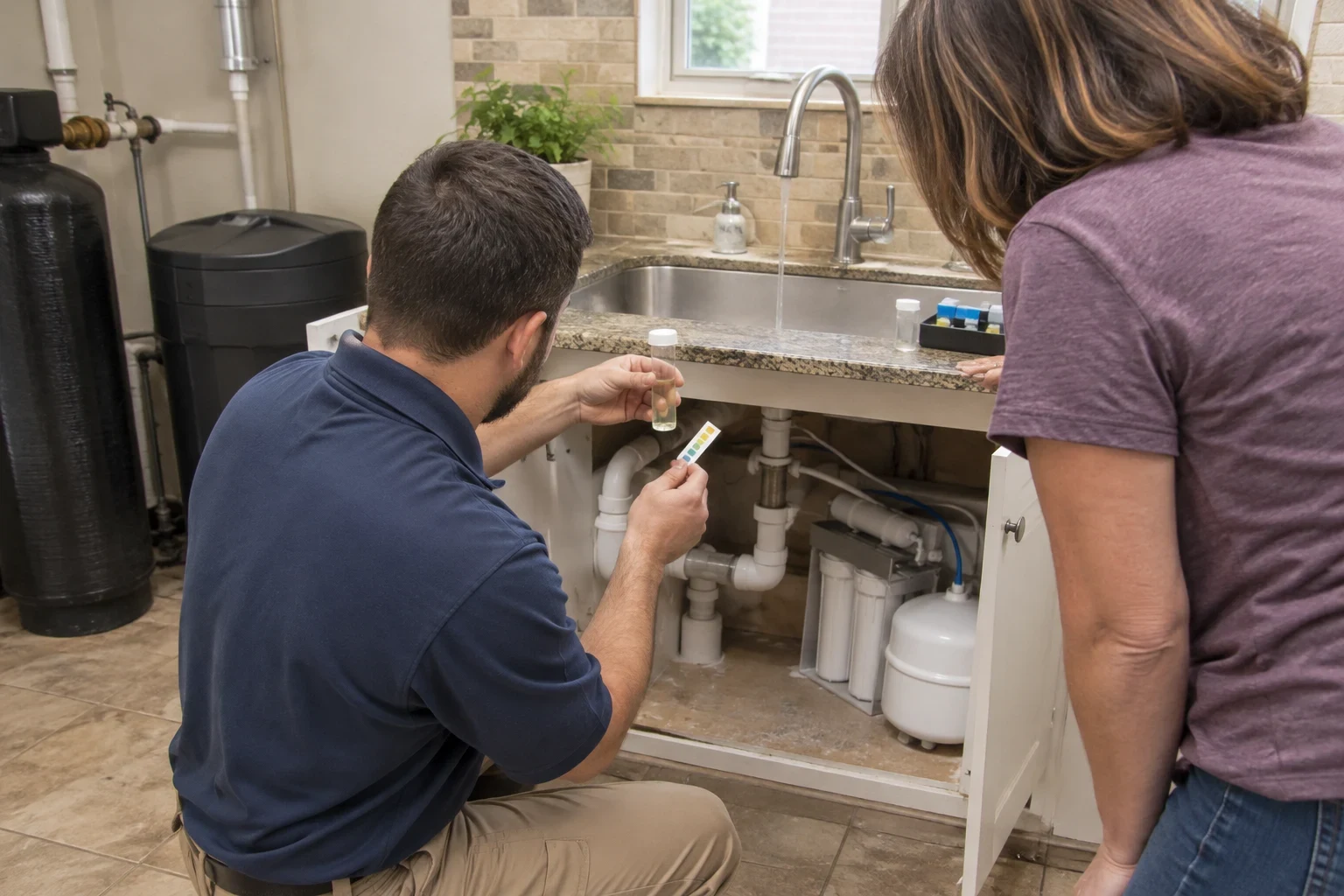
We draw water before the pressure tank and at a tap, then run the analysis. You get the results explained in plain numbers, with what each one means for your equipment.
- 2
Design the treatment train
We pick each stage and its order, and size tanks to your flow rate and household use so pressure does not drop at the shower. You hear exactly why each part is there.
- 3
Install at the pressure tank
The same crew mounts the equipment, ties it into the main line after the pressure tank and adds the bypass and a drain line for backwash. Water is off only for the hours we are cutting in.
- 4
Flush, set and retest
We flush the system, program backwash cycles and sanitize the lines if bacteria were present. A follow-up sample confirms the water is coming out the way the test said it should.
Well Water Treatment Questions
Do I really need a test before you recommend equipment?
Yes. Iron, sulfur and bacteria each need a different stage, and the levels set the tank size. Guessing usually means buying equipment that does not fix the problem, so we never skip the test.
Will a treatment system lower my water pressure?
Not if it is sized correctly. We match each stage to your well pump's flow rate, and backwashing filters keep the media bed from packing down and restricting flow.
Can one filter handle iron and the rotten-egg smell?
Often, yes. An air-injection or catalytic filter oxidizes both iron and hydrogen sulfide in the same tank. Very high sulfide levels may need a separate stage, which the test will show.
What maintenance does a well system need?
Expect to change sediment cartridges a few times a year, replace the UV lamp on its rated schedule and let backwash cycles run on their own. We set the schedule at install and come back for service.
Should I add reverse osmosis for drinking water?
Well treatment handles the whole house. Some families also add a reverse osmosis unit at the kitchen sink for lower dissolved solids in drinking and cooking water. Our water testing results will show whether it is worth it for you.
Find Out What Is in Your Well
We test first, explain what we find and build a system for your water only. The same people will handle your job from the first sample to the last service visit.